
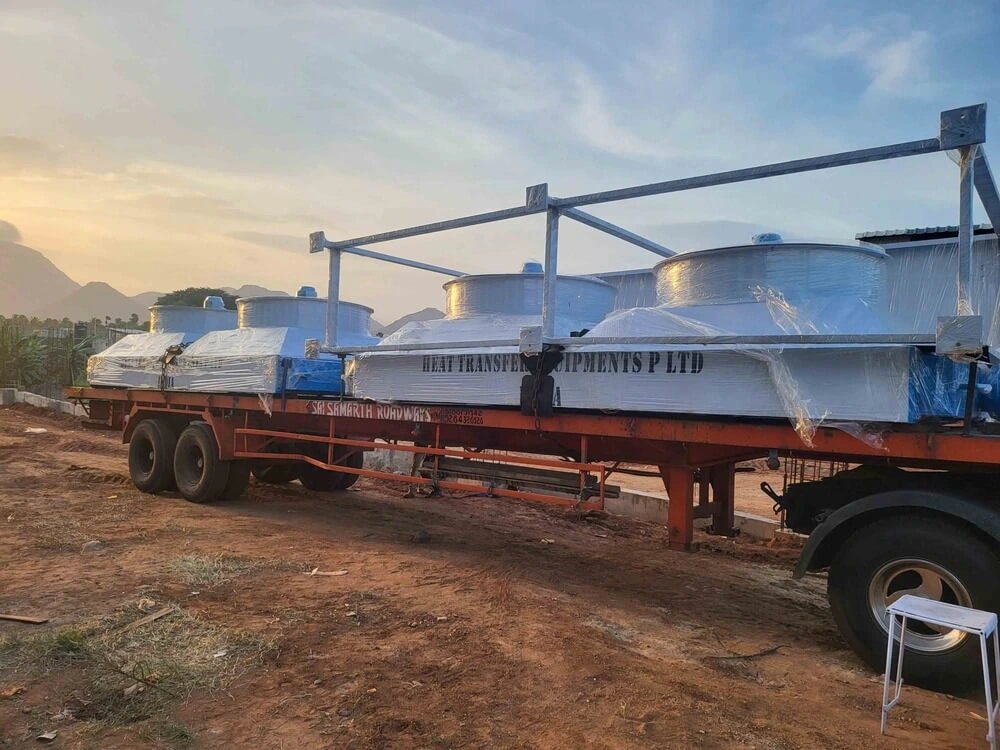
Heat Transfer Equipments Pvt. Ltd. (HTEPL) is an India-based manufacturer of custom industrial heat exchangers serving project enquiries from Dubai and across the UAE. Our equipment range includes shell and tube heat exchangers, air cooled heat exchangers, oil coolers and industrial condensers.
Manufactured in Coimbatore, India, our heat exchangers are designed according to process conditions, material specifications and operating requirements.
Request a Quotation by sharing your technical datasheet or equipment drawings.
1. Industrial Heat Exchanger Manufacturing Capabilities
HTEPL manufactures industrial heat exchangers according to customer-approved drawings, process requirements and material specifications. Its manufacturing activities cover shell fabrication, tube-bundle assembly, welding and equipment assembly for different exchanger configurations.
The Coimbatore facility supports fabrication, material inspection, dimensional checks and hydrostatic testing. These checks help verify that components meet the specified requirements before final assembly and dispatch.
For Dubai industrial buyers, manufacturing controls help reduce the risk of material mismatches, fabrication defects and equipment rejection. Buyers can request applicable manufacturing drawings, inspection records and test reports as part of the agreed project documentation.
2. Types of Heat Exchangers Available for Dubai Industries
HTEPL manufactures industrial heat exchangers and related process equipment for heating, cooling, condensation, heat recovery and pressure control applications. Equipment selection depends on the process fluid, heat duty, operating pressure, temperature and project requirements.
| Heat Exchanger Type | Suitable Industrial Duty |
|---|---|
| Shell and Tube Heat Exchanger | Process heating, cooling, condensation and heat recovery. |
| Fixed Tube Sheet Heat Exchanger | Heat transfer in services with manageable thermal expansion and limited shell-side cleaning access. |
| U-Tube Bundle Heat Exchanger | Applications involving differential thermal expansion. |
| Air Cooled Heat Exchanger | Cooling process liquids and gases using ambient air. |
| Air Fin Cooler | Cooling hot process fluids in refineries, petrochemical and industrial plants. |
| Finned Tube Heat Exchanger | Air and gas heating or cooling using extended heat-transfer surfaces. |
| Double Pipe Heat Exchanger | Heating or cooling duties with relatively small flow rates. |
| Marine Heat Exchanger | Engine, oil and freshwater cooling in marine systems. |
| Oil Cooler | Hydraulic and lubricating oil temperature control. |
| Kettle Reboiler | Vapor generation for distillation and separation processes. |
| Surface Condenser | Condensing turbine exhaust steam using cooling water. |
| Air Cooled Condenser | Condensing suitable vapours using ambient air. |
| Flue Gas Air Preheater | Recovering heat from flue gases to preheat combustion air. |
| Steam Coil Air Preheater | Heating combustion or process air using steam. |
Related Pressure Vessels and Process Equipment
HTEPL also provides information on pressure-control equipment used in industrial pipelines, pumping stations and utility systems.
| Equipment Type | Suitable Industrial Duty |
|---|---|
| Surge Vessel | Controlling water hammer and pressure surges in pipelines and pumping systems. |
| Bladder Surge Vessel | Hydraulic surge protection using a compressed gas cushion separated from the liquid by a flexible bladder. |
| Pressure Vessel | Containing pressurized fluids or gases according to specified design and safety requirements. |
Different applications require different equipment configurations. Heat exchangers transfer heat between fluids, while surge vessels and pressure vessels serve pressure-control or containment functions.
For Dubai industrial projects, the final equipment selection must meet the required process duty, materials, operating conditions and applicable design standards.
3. Heat Exchanger Manufacturer vs Supplier in Dubai: What Is the Difference?
A heat exchanger manufacturer fabricates equipment, while a supplier may source finished units from another company. Buyers comparing heat exchanger manufacturers in Dubai should verify who is responsible for manufacturing, inspection and equipment quality before selecting a vendor.
| Business Type | What Buyers Should Verify |
|---|---|
| Original Manufacturer | Factory location, fabrication capabilities and inspection facilities. |
| Trading Supplier | Actual equipment manufacturer, material traceability and quality responsibility. |
| Authorized Distributor | Manufacturer authorization, warranty coverage and spare-parts support. |
| Regional Sales Office | Manufacturing location, engineering support and after-sales responsibilities. |
Dubai has industrial and trading hubs such as JAFZA, Dubai Industrial City, Al Quoz and Ras Al Khor. However, a local business address does not automatically confirm in-house manufacturing.
Buyers can verify manufacturing responsibility through factory details, fabrication photographs, inspection records and applicable certificates.
A company searching for a heat exchanger manufacturer in Dubai may also consider overseas manufacturers when imported equipment meets its procurement requirements.
HTEPL manufactures heat exchangers in Coimbatore, India, allowing UAE buyers to submit project requirements directly for technical review and quotation.
4. Custom Heat Exchanger Design for Dubai Operating Conditions
Heat exchangers for Dubai industrial projects must be designed for the required heat duty, operating conditions and site environment. High ambient temperatures, dust and coastal exposure can affect cooling performance, material selection and maintenance requirements.
Thermal Design and Operating Parameters
Heat-transfer duty depends on fluid flow rate, fluid properties and the required temperature change. Design pressure, temperature, allowable pressure drop and fouling allowance influence exchanger sizing and mechanical construction.
Increasing fluid velocity may improve heat transfer but also raises pressure drop and pumping power. Fouling adds thermal resistance, reducing cooling performance over time.
These factors influence tube dimensions, heat-transfer area, flow arrangement and exchanger configuration.
High Ambient Temperature, Dust and Coastal Corrosion
Air cooled heat exchangers may lose cooling capacity as ambient temperature rises because the temperature difference between the process fluid and cooling air becomes smaller.
Example: Cooling oil to 50°C with 35°C inlet air requires a 15°C temperature approach. If inlet air rises to 45°C, maintaining the same outlet temperature requires a much smaller 5°C approach. The existing cooler may no longer meet the duty without changes to its design or operating conditions.
Dust accumulation on fins can restrict airflow and reduce heat transfer, making cleaning access important.
Coastal installations also require attention to chloride corrosion. Seawater service may need materials such as titanium or suitable duplex stainless steel, depending on water chemistry, temperature, velocity and operating conditions.
5. Heat Exchanger Manufacturing Standards, Certifications and Quality Control
Industrial heat exchangers must meet the design codes, inspection requirements and quality specifications agreed for each project. For Dubai buyers, these requirements help establish whether the equipment is suitable for its intended pressure, temperature and operating conditions.
Applicable Design Codes and Standards
ASME Section VIII applies to pressure equipment within its scope, while TEMA provides construction requirements for shell and tube heat exchangers.
API 660 covers shell and tube heat exchangers, and API 661 covers air cooled heat exchangers used in relevant petroleum, petrochemical and natural gas services.
The applicable standards, code editions and certification requirements depend on the equipment type and purchase specifications.
Inspection, Testing and Quality Documentation
Material traceability helps confirm that specified grades are used. Welding inspection, dimensional checks, required nondestructive examination and pressure testing help identify fabrication defects before dispatch.
HTEPL's website states that the company holds ISO 9001:2015 certification and ASME U-Stamp authorization. Buyers should verify current certificate validity, authorized scope and applicability to their equipment.
Project documentation may include general arrangement drawings, material certificates, inspection records and pressure-test reports according to the agreed requirements.
6. Industrial Applications of Heat Exchangers in Dubai and the UAE
Industrial heat exchangers serve different heating, cooling and condensation duties across Dubai and the UAE. Equipment selection depends on the process fluid, temperature, pressure and available utilities.
| Industry / Application | Suitable Heat Exchanger Duty |
|---|---|
| Oil and Gas | Hydrocarbon cooling using shell and tube or air cooled exchangers. |
| Petrochemical and Chemical Plants | Process-fluid cooling, condensation and heat recovery. |
| Power Generation and Utilities | Lubricating oil cooling and steam condensation. |
| Marine and Coastal Systems | Engine cooling using seawater-compatible heat exchangers. |
| District Cooling and HVAC | Heat transfer between suitable water circuits using plate or shell and tube designs. |
| Industrial Manufacturing | Process cooling using air or water. |
The selected equipment must match the specific process duty and operating limits rather than the industry name alone.
7. How to Select a Heat Exchanger Manufacturer for a Dubai Project
Selecting a heat exchanger manufacturer requires checking engineering capability, material suitability, quality documentation and long-term operating costs. The proposed equipment must meet the process duty and project specifications, not simply offer the lowest purchase price.
When comparing heat exchanger manufacturers in Dubai, buyers should also assess overseas suppliers against the same technical and quality requirements.
| Evaluation Area | What Buyers Should Verify |
|---|---|
| Thermal Performance | Required heat duty, outlet temperatures and allowable pressure drop. |
| Mechanical Design | Design pressure, materials, applicable codes and approved drawings. |
| Manufacturing Quality | Material certificates, inspection records, testing and required approvals. |
| Lifecycle Cost | Pressure drop, fouling, cleaning access and replacement-part availability. |
| Supply Capability | Manufacturing schedule, export packing, delivery terms and technical support responsibilities. |
A lower purchase price does not always mean a lower operating cost. Higher pressure drop increases pumping energy, while difficult cleaning access can extend maintenance downtime.
For example, two exchangers may meet the same cooling duty, but one may require greater pumping power or more frequent cleaning. These differences can increase operating costs over the equipment's service life.
Whether sourcing from overseas manufacturers or heat exchanger suppliers in Dubai, buyers should confirm spare-parts availability, corrosion protection and after-sales support responsibilities before placing an order.
8. Replacement Heat Exchangers and Tube Bundle Requirements
Replacement heat exchangers are considered when repeated tube leaks, severe corrosion or repair costs make continued operation uneconomical. The replacement must meet the required heat duty, design pressure, temperature and allowable pressure drop.
For removable-bundle designs, the new tube bundle must fit the existing shell, support arrangement and connection geometry. Fixed tubesheet exchangers generally do not allow conventional bundle removal.
Complete equipment replacement also requires checking nozzle positions, connection sizes, supports and installation space.
If corrosion or fouling caused the failure, review the operating conditions before selecting different materials. Buyers should provide existing drawings, datasheets and inspection findings for replacement assessment.
9. Heat Exchanger Manufacturing in India and Supply to Dubai
HTEPL manufactures custom heat exchangers in Coimbatore, India, and accepts export enquiries for industrial projects in Dubai and across the UAE. Buyers can submit process datasheets, equipment drawings or operating details for technical review.
When comparing heat exchanger companies in the UAE with overseas manufacturers, procurement teams should consider the complete supply process, including inspection, packing, shipping and delivery responsibilities.
HTEPL's engineering team evaluates heat duty, pressure, temperature, materials and project requirements before preparing a quotation.
Once the technical design is approved, fabrication and inspection proceed according to the agreed specifications. Completed equipment undergoes applicable inspections and testing before dispatch.
HTEPL's published manufacturing information includes export packing arrangements for sea and air freight.
Dubai buyers should confirm inspection release, shipping terms, required documentation and responsibility for customs clearance before placing an order.
Delivery schedules depend on equipment size, material availability, manufacturing requirements and shipping arrangements. The final lead time and delivery responsibilities should be confirmed in the quotation.
10. What Information Is Required for a Heat Exchanger Quotation?
Dubai buyers can request a heat exchanger quotation by submitting process specifications, equipment requirements and delivery details. Complete technical information helps HTEPL evaluate the proposed design and prepare an accurate quotation.
Include the following details in your RFQ:
- Process fluids: Hot-side and cold-side fluids, composition and relevant properties.
- Thermal requirements: Flow rates, inlet temperatures, required outlet temperatures and heat duty, if known.
- Operating conditions: Operating and design pressures and temperatures, allowable pressure drops and fouling allowances.
- Construction: Preferred materials, equipment dimensions, nozzle connections and installation space.
- Standards: Applicable design codes, inspection, testing and documentation requirements.
- Delivery: Dubai project location, required schedule and shipping terms.
For replacement equipment, attach existing drawings, equipment nameplate details or available inspection records.
If some process data is unavailable, identify the missing information for engineering review.
Request a Heat Exchanger Quotation
11. Frequently Asked Questions About Heat Exchanger Manufacturers in Dubai
1. Is HTEPL a Heat Exchanger Manufacturer Located in Dubai?
HTEPL is based in Coimbatore, India, not Dubai. The company manufactures custom industrial heat exchangers and accepts enquiries from Dubai and other UAE buyers.
2. Can an India-Based Heat Exchanger Manufacturer Supply Equipment to Dubai?
Yes. HTEPL accepts international equipment enquiries and provides export packing for sea or air freight. Actual shipping, documentation and delivery arrangements depend on the agreed project scope.
3. Can Heat Exchangers Be Custom-Manufactured for UAE Industrial Projects?
Yes. HTEPL manufactures heat exchangers based on heat duty, fluid properties, operating pressure, temperature, materials and equipment dimensions. The final design must meet the project's technical requirements.
4. Which Design Standards Should Dubai Buyers Specify for Heat Exchangers?
Depending on the equipment, buyers may specify ASME Section VIII, TEMA, API 660 or API 661. Confirm the applicable code edition, certification requirements and inspection scope before manufacturing.
5. How Can I Request a Heat Exchanger Quotation for My Dubai Project?
Submit your process datasheet, equipment drawings or available operating details through the HTEPL contact page. Include fluid details, flow rates, operating conditions and delivery requirements to help the engineering team prepare a quotation.
Conclusion: Request a Heat Exchanger Quotation for Dubai, UAE
Heat Transfer Equipments Pvt. Ltd. (HTEPL) manufactures custom industrial heat exchangers for process heating, cooling, condensation and heat recovery. Equipment is designed according to operating conditions, material specifications and applicable quality requirements.
For your Dubai or UAE project, share your technical datasheet, equipment drawings and delivery requirements for engineering review and quotation.